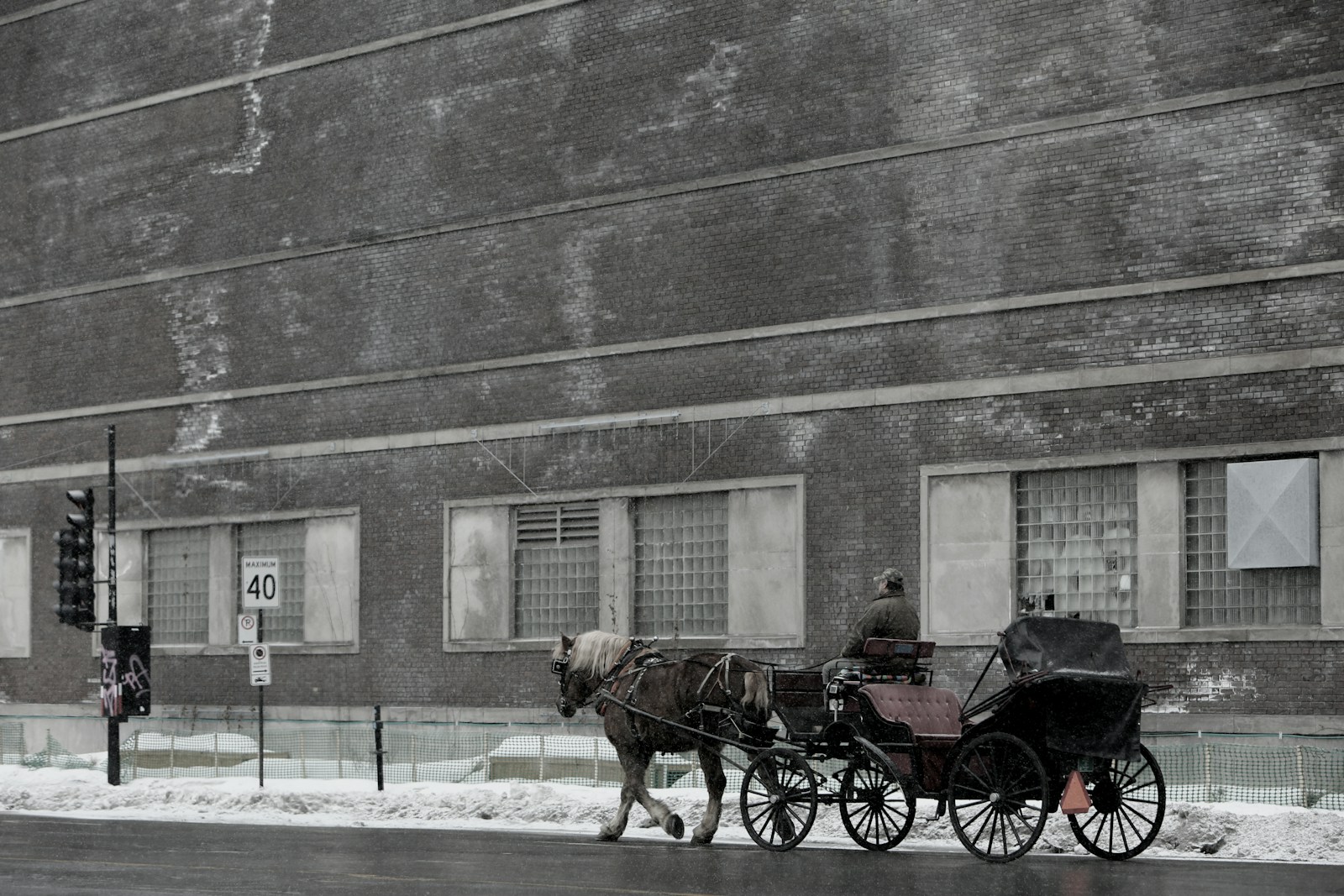
By Percival Hume, Special Correspondent for Cultural Affairs
Fitzrovia, a London neighbourhood which has never been entirely comfortable with the present, has taken a decisive step towards correcting what its founders describe as “the unfortunate business of modernity”.
A newly established organisation, the Fitzrovia Institute for Applied Nostalgia (FIAN), has announced an ambitious scheme to recreate everyday life as it was in 1897, everyday next week, on the grounds that civilisation has been in gradual decline ever since.
The Institute, housed in a former solicitor’s office on Mortimer Street, is the brainchild of local historian and temporal restorationist Professor Ambrose Quill.
“People are becoming increasingly dissatisfied with contemporary existence,” he explained at the Institute’s inaugural gathering. “They are overwhelmed by digital communications, electric vehicles, supermarket loyalty cards and the general vulgarity of being so contactable. In 1897, one could spend an entire afternoon waiting for a telegram and still consider it a productive day.”
The proposed scheme, entitled The Restoration of Ordinary Life, will initially operate on a trial basis in several Fitzrovia streets.
Participants will be encouraged to dress in appropriate Victorian attire, conduct business using fountain pens, communicate through handwritten correspondence and refrain from using mobile telephones between the hours of 9am and 6pm.
Coffee shops have been invited to replace cappuccinos with beef tea, while restaurants are being encouraged to introduce boiled puddings and remove the word ‘brunch’ from their menus.
Perhaps most controversially, the Institute proposes the introduction of a local curfew, after which residents will be expected to retire by candlelight.
The question of sanitation remains under consideration.
Professor Quill is particularly enthusiastic about the restoration of Victorian social etiquette.
“We have lost the art of being properly introduced,” he lamented. “Nowadays people simply approach one another and say hello. It is quite extraordinary. We propose the reintroduction of calling cards, formal invitations and the occasional duel, although the latter will be subject to legal advice.”
Local reaction has been predictably divided.
Mrs Beatrice Pumphrey, who has lived in Fitzrovia for 47 years, is enthusiastic.
“I think it’s marvellous. I’ve always felt the neighbourhood was better before everyone started carrying little televisions in their pockets. And I rather fancy a gentleman in a top hat.”
Local technology entrepreneur Felix Brindle is less convinced.
“I’ve got four businesses, three children, two mortgages and one wife. I can’t realistically go back to 1897. Besides, I don’t think the Victorians had Deliveroo.”
Meanwhile, the owner of a nearby coffee shop has expressed concern about the proposed replacement of espresso machines with traditional coffee percolators.
“I’ve invested £14,000 in equipment,” he said. “I’m not throwing it all away because some chap with sideburns has developed an objection to the twenty-first century.”
THE ECONOMIC QUESTION
The Institute estimates that the project will cost approximately £2.8 million, although this figure excludes the expense of acquiring suitable horses, carriages and a sufficient quantity of authentic Victorian street furniture.
Funding applications have been submitted to the Heritage Lottery Fund, the Arts Council and an anonymous benefactor believed to be a retired shipping magnate.
A proposed sponsorship arrangement with a mobile telephone manufacturer was abandoned after Professor Quillworthy described smartphones as “the pocket-sized instruments of our collective intellectual impoverishment”.
THE FUTURE
If the Fitzrovia experiment proves successful, the Institute hopes to extend its activities to Marylebone, Bloomsbury and eventually the entire capital.
There are even suggestions of a permanent Victorian quarter, complete with hansom cabs, gas lamps, gentlemen’s clubs and a dedicated department for the investigation of suspicious behaviour.
Asked whether he believed modern residents would genuinely embrace such a radical change, Professor Quillworthy was characteristically optimistic.
“Of course. People are desperate for a simpler life. They want fewer emails, fewer meetings and more meaningful human contact. They want to read Dickens, drink sherry and complain about the price of coal.”
He paused before adding:
“Although I should point out that we shall be retaining central heating. We are nostalgic, not completely unreasonable.”
The Institute’s first public event, a Victorian evening of poetry, port and parliamentary gossip, takes place next Thursday.
Admission is £25, payable in cash, postal order or, preferably, sovereigns.
Mobile phones will be confiscated at the door and returned the following morning by a special penny-farthing-mounted messenger.
